
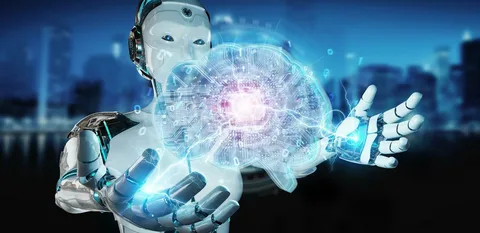
Artificial Intelligence (AI) has transitioned from the realm of science fiction to a transformative force that impacts nearly every facet of our lives. From enabling virtual assistants on our smartphones to guiding self-driving cars and revolutionizing industries, AI is shaping the present and defining the future. In this article, we will embark on a deep dive into the power of Artificial Intelligence, exploring its history, capabilities, applications, and the ethical considerations that come with it.
The History of AI
The concept of AI dates back to ancient myths and stories of mechanical beings with human-like intelligence. However, AI as we know it today began to take shape in the mid-20th century:
1. The Dartmouth Workshop (1956):
The term “Artificial Intelligence” was coined at the Dartmouth Workshop in 1956, where researchers aimed to develop machines that could simulate human intelligence.
2. Early AI Successes:
In the following decades, AI achieved significant milestones, such as the development of expert systems and rule-based AI programs.
3. The AI Winter:
In the 1970s and 1980s, AI faced periods of reduced funding and interest known as “AI winters.”
4. The Rise of Machine Learning:
The 21st century saw the resurgence of AI, driven by advancements in machine learning, neural networks, and the availability of vast amounts of data.
AI Capabilities
AI encompasses a range of capabilities that enable machines to perform tasks that typically require human intelligence. Some key AI capabilities include:
1. Machine Learning:
AI systems can learn from data, identify patterns, and make predictions or decisions without explicit programming.
2. Natural Language Processing (NLP):
NLP allows machines to understand and interact with human language, enabling chatbots, language translation, and sentiment analysis.
3. Computer Vision:
AI systems can process and interpret visual information, enabling facial recognition, object detection, and autonomous vehicles.
4. Speech Recognition:
AI-powered speech recognition systems convert spoken language into text, enabling voice assistants and transcription services.
5. Robotics:
AI-driven robots can perform tasks in various domains, from manufacturing and healthcare to exploration and space missions.
Applications of AI
AI is pervasive across industries and has a broad range of applications, including:
1. Healthcare:
AI aids in disease diagnosis, drug discovery, personalized medicine, and healthcare management.
2. Finance:
AI is used for fraud detection, algorithmic trading, credit scoring, and customer service chatbots.
3. Education:
AI enhances personalized learning, automates administrative tasks, and provides educational content recommendations.
4. Transportation:
AI powers self-driving cars, traffic management systems, and predictive maintenance for vehicles.
5. Entertainment:
AI is used for content recommendation, video game design, and generating art and music.
6. Manufacturing:
AI-driven robots and automation optimize manufacturing processes and quality control.
7. Agriculture:
AI aids in precision farming, crop monitoring, and autonomous farming equipment.
8. Space Exploration:
AI guides space probes, rovers, and spacecraft in exploring the cosmos.
Ethical Considerations
As AI becomes more powerful and integrated into our lives, ethical considerations are paramount:
1. Bias and Fairness:
AI algorithms can inherit biases present in training data, leading to unfair or discriminatory outcomes.
2. Privacy:
AI systems that collect and analyze personal data raise concerns about privacy and data protection.
3. Job Displacement:
Automation driven by AI can lead to job displacement and workforce disruption.
4. Accountability:
Determining responsibility and accountability for AI-generated decisions and actions can be challenging.
5. Regulation:
AI regulation is a complex issue, with debates surrounding ethics, safety, and transparency.
The Future of AI
The future of AI holds promise and uncertainty. As AI continues to advance, it has the potential to solve complex problems, improve efficiency, and enhance our lives. However, it also poses challenges that require careful consideration and ethical stewardship. The path forward involves responsible development, transparent algorithms, and an ongoing dialogue about the ethical, social, and economic implications of AI. Ultimately, AI’s power lies not only in its capabilities but in how society chooses to harness and govern it.